Marble Canyon in Kootenay National Park is one of the most spectacular natural wonders in the Canadian Rockies. Easy walking trail that follows the canyon itself.
Marble Canyon stands out with a dramatic gorge carved by Tokumm Creek, where thousands of years of rushing glacial water have cut deep into layers of limestone rock. Every bridge reveals a different angle, making even a short walk feel like a constantly changing experience.
The Golden Skybridge, located in Golden, British Columbia, is home to Canada's highest suspension bridges. The Zipline spans 1,000 feet across a scenic canyon with a unique aerial perspective of Golden's natural beauty.
Book Banff National Park Adventures and Attractions. Originally set aside to preserve sulphur hot springs for public use, Banff National Park's towering peaks and beautiful meadows make it among Canada's most incredible holiday areas. Plan your Canadian Rockies vacation and Book Banff's most popular attractions.
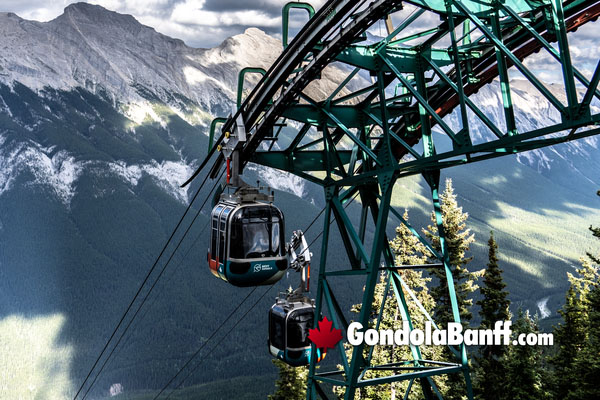
The Popular Banff Gondola provides visitors with an amazing scenic ride to the summit of Sulphur Mountain, offering panoramic views of the Canadian Rockies and the Bow Valley.
Marble Canyon is one of the most spectacular natural wonders in the Canadian Rockies and one of the most rewarding short stops for travelers exploring the scenic route between Banff and Radium Hot Springs.
Marble Canyon
Located in the heart of Kootenay National Park, Marble Canyon is one of the most spectacular natural wonders in the Canadian Rockies and one of the most rewarding short stops for travelers exploring the scenic route between Banff and Radium Hot Springs.
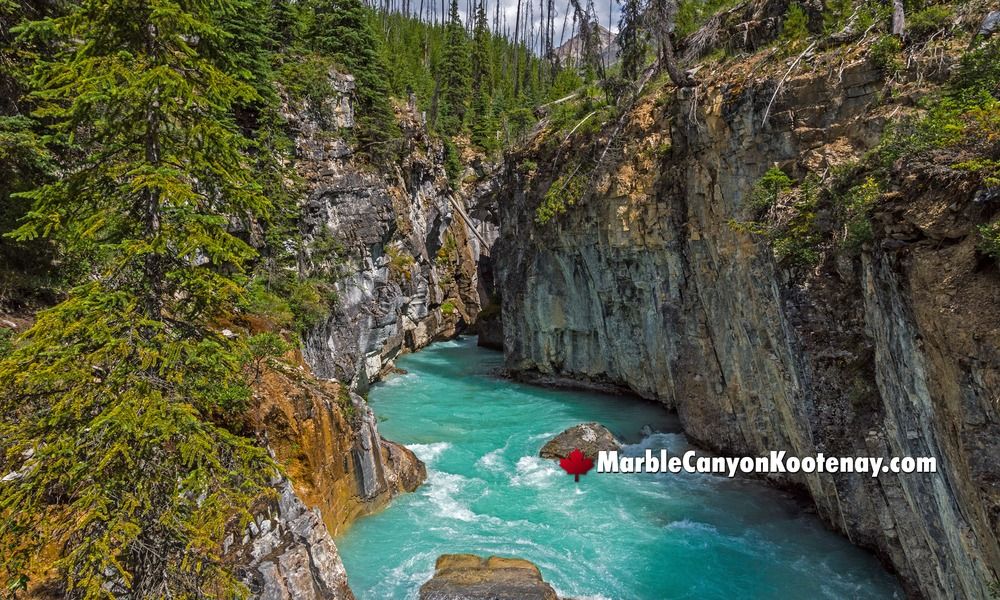
What immediately makes Marble Canyon stand out is the dramatic gorge carved by Tokumm Creek, where thousands of years of rushing glacial water have cut deep into layers of limestone rock, creating a narrow canyon with steep vertical walls. In some sections, the canyon becomes surprisingly tight, with powerful turquoise water surging through the rock far below.
The main attraction is the easy walking trail that follows the canyon itself. A series of bridges cross over the gorge multiple times, giving visitors constantly changing perspectives as they look down into deep rock chambers, narrow channels, waterfalls, and swirling pools of brilliantly colored glacier-fed water. Every bridge reveals a different angle, making even a short walk feel like a constantly changing experience.
One of the most fascinating parts of Marble Canyon is its geology. The canyon walls are formed from ancient limestone deposited hundreds of millions of years ago when this entire region sat beneath a shallow inland sea. Over immense stretches of time, water slowly exploited fractures in the rock and carved the dramatic canyon visitors see today.
Book Banff
Marble Canyon
During spring and early summer, snowmelt from the surrounding mountains causes the water to rush even more powerfully through the gorge, creating loud roaring waterfalls and intense water movement that makes the canyon especially impressive. During warmer summer days, the bright blue-green water contrasts beautifully against the pale canyon walls and dark green forest surrounding the area.
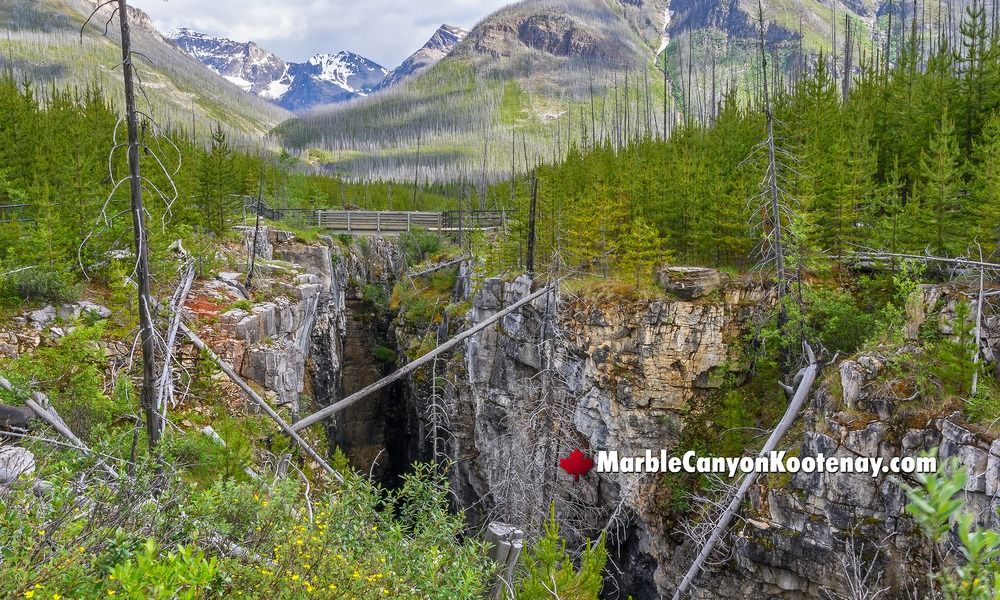
The surrounding landscape also tells the story of nature's resilience. Portions of the forest around Marble Canyon have recovered from past wildfires, and visitors can often see young regrowth mixed among standing older trees, showing how quickly the mountain ecosystem adapts and rebuilds.
Wildlife is part of the experience as well. Deer, squirrels, birds, and occasionally larger wildlife move through the surrounding forest, reminding visitors that even along a short roadside walk, they remain deep within a protected wilderness ecosystem.
Because the trail is short, relatively flat, and easy to access, Marble Canyon is very popular with families, photographers, and travelers looking for a quick but memorable stop without committing to a long hike.
Marble Canyon is one of the Canadian Rockies' hidden gems - a beautiful walk above a narrow limestone gorge filled with rushing turquoise water, waterfalls, fascinating geology, and some of the most dramatic canyon scenery anywhere in Kootenay National Park.Golden Skybridge
Booking Golden Skybridge includes All taxes, fees and handling charges.
Marble Canyon – Kootenay National Park, British Columbia
Marble Canyon is one of the most remarkable natural attractions in Kootenay National Park, offering visitors an extraordinary opportunity to explore a narrow limestone gorge carved by thousands of years of flowing water. Located in the Canadian Rockies of southeastern British Columbia, Marble Canyon features dramatic rock formations, turquoise glacial waters, cascading waterfalls, and a series of pedestrian bridges that provide spectacular views into the canyon below.
Unlike many mountain attractions that require lengthy hikes, Marble Canyon is accessible by a relatively short walking trail. Visitors can experience its impressive geological formations, powerful rushing water, and dramatic canyon walls within a short distance of the parking area.
The canyon is particularly fascinating because of the contrast between its pale limestone walls, dark rock crevices, turquoise water, and surrounding evergreen forests. Its location along Highway 93 South makes it an excellent stop for travellers exploring Kootenay National Park or driving between Banff and Radium Hot Springs.
Location and Access - Where Is Marble Canyon Located?
Marble Canyon is located along Highway 93 South in Kootenay National Park, approximately 18 kilometres southwest of Castle Junction and about 50 kilometres from the town of Banff. It lies near the northern end of Kootenay National Park, making it one of the first major attractions encountered when entering the park from the Banff area.
The canyon is situated in the Vermilion River watershed, where Tokumm Creek has carved a deep, narrow passage through the surrounding limestone formations.
Visitors travelling from Banff follow the Trans-Canada Highway west toward Castle Junction before turning south onto Highway 93. The Marble Canyon parking area is located directly beside the highway and is clearly marked.
Marble Canyon Parking Area
Marble Canyon has a designated roadside parking area providing convenient access to the trailhead. Visitors can park their vehicles and begin exploring the canyon within a short walking distance.
The parking area is particularly convenient for travellers following the scenic Kootenay National Park highway, as the attraction requires relatively little additional driving or hiking.
Parking availability can become limited during busy summer afternoons, particularly on weekends and holidays. Arriving earlier in the morning can provide a quieter experience.
Marble Canyon Trail and Walking Experience
Marble Canyon Hiking Trail - The Marble Canyon Trail is a short interpretive walking route that follows the edge of the gorge, crossing the canyon at several locations using constructed pedestrian bridges.
The main out-and-back walk is approximately 1.6 kilometres, depending on the turnaround point, and generally takes between 20 and 40 minutes. Visitors interested in photography, geology, and sightseeing may wish to spend considerably longer.
The trail features sections of packed earth, gravel, wooden walkways, stairs, and bridges. Although relatively short, some portions involve uneven surfaces and changes in elevation.
The trail is suitable for many families and casual walkers, although visitors should remain cautious near steep drop-offs and during wet or icy conditions.
Marble Canyon Pedestrian Bridges
One of Marble Canyon's most distinctive features is its series of pedestrian bridges crossing the narrow gorge.
These bridges allow visitors to stand above the rushing waters of Tokumm Creek and look directly into the deep rock channels below. From different bridge locations, visitors can observe the canyon's changing width, steep limestone walls, and swirling water.
Some crossings provide views of exceptionally narrow sections where the canyon walls appear almost close enough to touch.
The bridges also create excellent photography opportunities, allowing visitors to capture the dramatic contrast between the rock formations, flowing water, and surrounding mountain landscape.
Marble Canyon Waterfalls
At the upper end of the main canyon trail, visitors encounter a waterfall where Tokumm Creek plunges through the limestone gorge.
The waterfall is one of the highlights of the Marble Canyon experience. Its rushing water demonstrates the tremendous erosive power responsible for creating the canyon.
During late spring and early summer, snowmelt increases the creek's flow, producing particularly impressive cascades and powerful rushing water.
Later in the summer and early autumn, water levels may decrease, making some of the canyon's intricate rock formations easier to observe.
Marble Canyon Viewing Platforms
Along the trail, several viewpoints and bridge crossings provide opportunities to observe the canyon from different perspectives.
Some viewpoints overlook deep, shadowed sections of the gorge, while others reveal wider sections of the creek surrounded by pale limestone.
Visitors can appreciate the dramatic depth of the canyon, the sculpted rock surfaces, and the natural patterns created by flowing water.
The viewing locations are particularly appealing to photographers because the changing angles reveal different combinations of rock, water, vegetation, and light.
Geological Features and Natural History
How Was Marble Canyon Formed? - Marble Canyon was created through the gradual erosion of carbonate rock by Tokumm Creek. Over thousands of years, flowing water exploited natural cracks and weaknesses in the bedrock, gradually widening and deepening them into the dramatic gorge visible today.
During periods of heavy snowmelt, increased water volume carries sediment, gravel, and small rocks through the canyon. These materials act as natural abrasives, slowly polishing and sculpting the rock.
The result is a fascinating collection of smooth walls, rounded depressions, narrow channels, and deep crevices.
Why Is It Called Marble Canyon?
The canyon takes its name from the pale, marble-like rock formations visible along its walls. The area's geology includes carbonate rock, with some material described as marble formed through the recrystallization of limestone.
Water erosion has polished many surfaces, producing distinctive smooth textures and patterns.
Marble Canyon Rock Potholes
One of the canyon's fascinating geological features is the presence of rounded potholes carved directly into the bedrock.
These circular depressions form when turbulent water traps stones and sediment in swirling currents. Over time, the rotating materials grind away the surrounding rock.
Some potholes are relatively small, while others are considerably larger, illustrating the enormous influence of moving water on the landscape.
Turquoise Water of Tokumm Creek
The striking blue-green water flowing through Marble Canyon is another highlight of the attraction.
Its appearance varies according to suspended sediment, water depth, lighting, and seasonal runoff. In certain conditions, the creek displays brilliant turquoise colours that contrast beautifully with the pale canyon walls.
During periods of heavy runoff, the water can appear more cloudy or grey because of increased sediment.
Forests, Wildlife and Natural Surroundings
Marble Canyon Forest Landscape - Marble Canyon is surrounded by a rugged mountain environment featuring coniferous forests, rocky slopes, and areas recovering from past wildfires.
The 2003 Kootenay National Park wildfires significantly affected the surrounding landscape. Today, visitors can observe regenerating vegetation, young trees, standing dead trunks, and other evidence of ecological recovery.
This combination of living forest and fire-affected terrain provides an opportunity to understand how natural disturbances influence mountain ecosystems.
Wildlife Near Marble Canyon
The surrounding forests and valleys provide habitat for numerous Canadian Rockies wildlife species.
Elk, mule deer, white-tailed deer, black bears, and grizzly bears may occur in the broader Kootenay National Park landscape. Smaller mammals, including red squirrels and chipmunks, are more likely to be noticed near forested sections of the trail.
Birdlife includes ravens, woodpeckers, and various forest songbirds.
Wildlife sightings are never guaranteed. Visitors should maintain safe distances, carry bear spray, and avoid feeding animals.
Marble Canyon Throughout the Seasons
Marble Canyon in Spring - Spring brings melting snow, rising water levels, and renewed activity throughout the surrounding forest. Tokumm Creek becomes particularly powerful as mountain snowmelt increases the volume of water moving through the gorge. Snow and ice may persist along shaded sections of the trail well into spring, making appropriate footwear important.
Marble Canyon in Summer
Summer is generally the most popular season to explore Marble Canyon. Warmer temperatures, longer daylight hours, and typically clearer trail conditions make the attraction especially appealing.
The canyon's bridges provide excellent views of flowing water, polished rock formations, and the surrounding mountain scenery. Summer is also an excellent time to combine Marble Canyon with other Kootenay National Park attractions.
Marble Canyon in Autumn
Autumn brings cooler temperatures, quieter trails, and beautiful seasonal changes to the surrounding forest. Golden deciduous vegetation contrasts with dark evergreen trees, while lower water levels can reveal additional rock formations. Morning frost and early snowfall may create slippery conditions on bridges and shaded sections.
Marble Canyon in Winter
Winter transforms Marble Canyon into an impressive landscape of snow-covered rock walls, frozen waterfalls, and ice formations.
The canyon's narrow passages create striking contrasts between white ice, dark rock, and any remaining flowing water. Winter visitors should exercise additional caution. Parks Canada does not maintain or patrol Kootenay National Park hiking trails during winter, and Marble Canyon can have icy, slippery sections. Ice cleats or microspikes are strongly recommended when conditions warrant.
Visitor Facilities and Accessibility
Marble Canyon Washrooms and Picnic Facilities - The Marble Canyon day-use area provides parking, washrooms, and picnic facilities. Amenities are relatively basic compared with larger tourist attractions.
There are no major restaurants, visitor shopping centres, or commercial entertainment facilities at the canyon itself.
Visitors should bring drinking water, appropriate clothing, and any snacks they may require.
Is Marble Canyon Wheelchair Accessible?
Although the day-use area has accessible facilities, the complete Marble Canyon walking trail should not be considered wheelchair accessible.
The trail includes uneven surfaces, changes in elevation, and sections that may be difficult for wheelchairs or mobility devices.
Visitors with limited mobility may be able to enjoy portions near the parking area, depending on individual needs and trail conditions.
Can Dogs Visit Marble Canyon?
Dogs are permitted on the Marble Canyon Trail when kept on a leash. Owners should maintain control of their pets, particularly on narrow bridges, near steep canyon edges, and in areas where wildlife may be present.
Nearby Attractions and Hiking Opportunities
Marble Canyon to Paint Pots Trail - Visitors interested in a longer walking experience can explore the connecting trail between Marble Canyon and the Paint Pots.
The connecting route is approximately 2.9 kilometres one way and travels through a mixture of mature forest, regenerating vegetation, and scenery associated with the Vermilion River valley. The Paint Pots are distinctive mineral springs known for their orange and reddish-brown iron-rich deposits.
Stanley Glacier Trail
Located a short drive north of Marble Canyon, the Stanley Glacier Trail provides a more demanding hiking experience. The route passes through a landscape affected by wildfire before climbing toward dramatic mountain cliffs and glacier scenery. This attraction is especially appealing to visitors interested in mountain geology, alpine environments, and longer hiking opportunities.
Marble Canyon Campground
Marble Canyon Campground is situated near the attraction and offers a convenient base for exploring northern Kootenay National Park. The campground has 60 unserviced sites, primarily suitable for tents and smaller recreational vehicles. Reservations are required during its operating season.
Why Marble Canyon Is Worth Visiting
Marble Canyon offers one of the most rewarding short walks in Kootenay National Park. Few attractions provide such close views of dramatic geological formations, waterfalls, deep rock channels, and mountain scenery within such a compact walking distance.
The seven pedestrian bridges make the experience particularly memorable, allowing visitors to observe the canyon from multiple angles while appreciating the power of water erosion.
For travellers exploring the Canadian Rockies, Marble Canyon is an excellent addition to a scenic drive through Kootenay National Park. Its combination of geological history, natural beauty, accessible sightseeing, and year-round seasonal changes makes it a worthwhile destination for families, photographers, nature enthusiasts, and visitors of many ages.
This is a nice short hike through amazing scenery.
Jose Diaz
This is a nice short hike through amazing scenery. The parking lot is not too big but we were able to find a spot at 10am on a Sunday. There are washrooms at the trailhead.
The hike is very easy and offers incredible views.
Well maintained walkways. Safety rails for all lookouts.
Kandis C
Great location. Accessible parking. Right off the highway but the paths are far in enough to not hear vehicles and road noise. Amazing views. Well maintained walkways. Safety rails for all lookouts. Informative signage.
Marble Canyon offers multiple views of Mountains and gorgeous scenery of nature and Canyon with glacier water running through.
Angelo Garcia
Located just outside Alberta in BC, Marble Canyon offers multiple views of Mountains and gorgeous scenery of nature and Canyon with glacier water running through the tunnels underneath, several bridges provide excellent opportunities for visitors to enjoy the views and take pictures. Please don’t litter,wear proper clothing and footwear according to the weather.
Spectacular trail along Marble Canyon creek and canyon.
Juliet Martin
Spectacular trail along Marble Canyon creek and canyon. The inbound trek provides a steady climb mostly on hard packed surfaces and rock. It was still snow covered and icy or slushy in patches in early spring so sturdy hiking boots with good grips are strongly recommended. Also poles would be helpful, although there are good safety barriers and some hand rails along the steepest climbs. We visited on April 29th and there was still plenty of snow on the trail. The round trip in and out takes roughly 30 or 40 minutes.
 Marble Canyon



 This is a nice short hike through amazing scenery.